Climate change is not just an environmental issue, but a profound human rights crisis. As global temperatures rise, sea levels climb and weather patterns become increasingly unpredictable, the consequences are falling hardest on the most vulnerable people and communities. From food insecurity and water scarcity to forced displacement and health emergencies, climate change threatens the very conditions that make a dignified life possible. Recognizing the human rights dimension of climate change is essential to ensuring that our response is not only effective, but just.
At the most basic level, climate change undermines the right to life, health, shelter, food and water. Extreme heatwaves kill thousands every year, while rising sea levels put entire island nations at risk of disappearing. Droughts ruin crops, pushing families into hunger and poverty. Storms and floods destroy homes and infrastructure, leaving people without shelter or access to healthcare. The right to live in a safe and healthy environment is increasingly under threat and those who are least responsible for the crisis are suffering the most.
Indigenous peoples, smallholder farmers, low-income communities, women and children are disproportionately affected by climate-related impacts. These groups often have the fewest resources to adapt and the least political power to influence decisions that affect them. In many cases, they also live in areas most exposed to climate risks, such as coastal regions, arid lands or deforested zones. The injustice is clear: those who have contributed the least to greenhouse gas emissions are paying the highest price.
Climate change also intersects with displacement and migration. As land becomes uninhabitable and livelihoods are destroyed, millions are being forced to move, either within their own countries or across borders. These so-called “climate refugees” are often left without legal protection, as international refugee law does not currently recognize environmental causes as grounds for asylum. Yet, for many, the choice is stark: move or perish. This legal and moral gap urgently needs to be addressed in global policy frameworks.
Human rights law offers an important lens for addressing these challenges. It emphasizes accountability, participation, non-discrimination and protection for the most vulnerable. A human rights-based approach to climate action means that mitigation and adaptation efforts must respect and uphold the dignity and rights of all people. It means listening to those most affected, ensuring their participation in decision-making and protecting their access to basic services even in times of environmental crisis.
One of the most powerful developments in recent years has been the recognition of the right to a healthy environment as a universal human right. In 2021, the United Nations Human Rights Council formally affirmed this right and in 2022, the UN General Assembly followed suit. While not legally binding, these declarations send a strong message that environmental protection and human dignity are inseparable. They also provide a foundation for holding governments and corporations accountable for actions that harm the planet and its people.
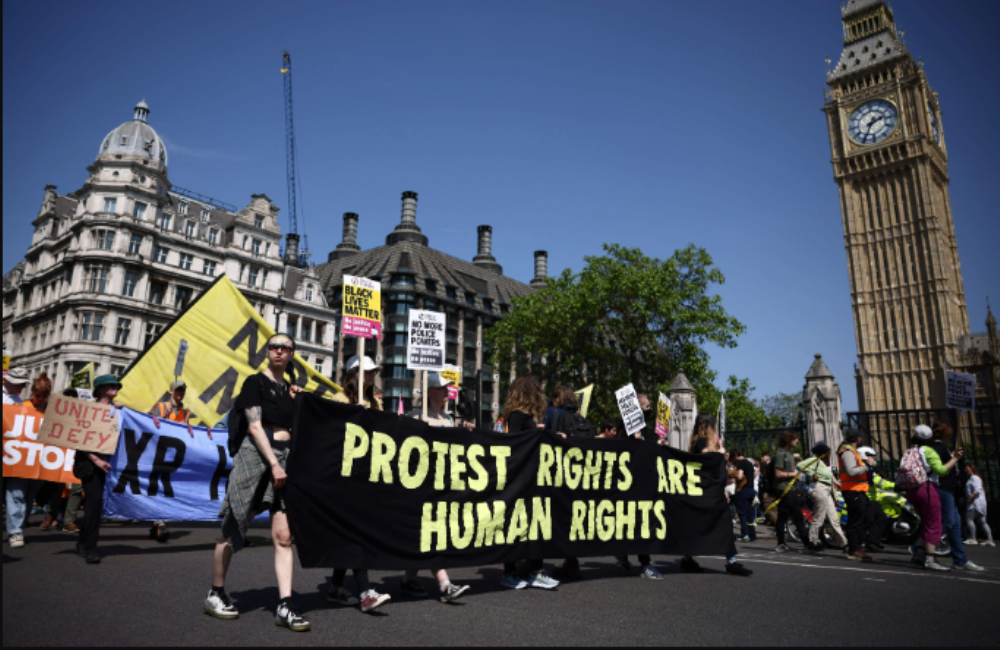
Youth movements, indigenous activists and frontline communities have been at the forefront of connecting human rights to climate justice. From legal challenges against fossil fuel companies to global protests demanding action, they are reminding the world that inaction is not just dangerous, it is unjust. The rise of climate litigation, where governments and polluting industries are being taken to court for violating environmental and human rights obligations, is an encouraging sign that legal accountability is gaining ground.
However, climate policies themselves must also be scrutinized through a human rights lens. While transitioning away from fossil fuels is critical, it must not be done in a way that displaces workers without support, seizes indigenous land for “green” projects or deepens inequality. A just transition means ensuring that environmental solutions are inclusive, equitable and respectful of human rights from start to finish.
International cooperation is key. The Paris Agreement includes important language on human rights, calling on states to respect, promote and consider human rights in climate actions. But the gap between promises and reality remains wide. Wealthy countries have a particular responsibility, not only because of their historical emissions, but because they have the means to support adaptation and resilience efforts in the Global South. Climate finance, technology transfer and capacity-building must be scaled up to meet this urgent need.
Climate change is testing the foundations of our global human rights framework. It is challenging us to expand our understanding of what it means to protect life, liberty and dignity in a changing world. But it is also offering an opportunity, a chance to build societies that are more resilient, more inclusive and more respectful of the planet we all share.
In the face of this crisis, silence is complicity and delay is denial. Defending human rights in the era of climate change requires courage, cooperation and a renewed commitment to justice, not just for today, but for generations to come. Because, the right to a future on a livable planet belongs to us all.
 The Human Rights Observer