As of late-May 2020, more than half of humanity has lived under some form of COVID-19 lockdown. Borders have been closed, businesses shuttered and millions confined to their homes; all in the name of public health. But as weeks have turned into months, questions are intensifying: How long can such extraordinary restrictions remain in place? Who bears the greatest burden? And how do we ensure that in protecting lives, we do not erode the very rights that give life its dignity?
From the beginning, the lockdown measures imposed around the world were based on legitimate public health goals. Governments invoked emergency powers to slow the spread of a novel virus that threatened to overwhelm healthcare systems. The principle of protecting life, a core human right, was the driving force behind these policies. In many places, lockdowns worked: infection rates fell and hospitals avoided catastrophic collapse.
But no emergency measure exists in a vacuum. Every restriction on movement, assembly, education or labor touches on a set of human rights. And in many cases, these rights are being suspended or curtailed with little oversight, unclear timeframes and growing consequences for vulnerable populations.
Freedom of movement, for example, is a basic right under Article 13 of the Universal Declaration of Human Rights. During lockdowns, this freedom has been almost entirely restricted in many countries. While limitations can be justified during a health crisis, international law insists they must be necessary, proportionate, non-discriminatory and time-bound. In practice, this has not always been the case. In some states, sweeping curfews, mass arrests and heavy-handed enforcement have disproportionately targeted the poor, minorities and migrant workers.
The right to work and earn a livelihood is also central to human dignity. For millions, especially those in informal economies or without legal protections, lockdowns have meant instant and complete loss of income. Food insecurity has surged. In some countries, migrant laborers were left stranded, without transport, shelter or wages. Social protections, where they exist, have been uneven and often inaccessible. Human rights do not disappear in times of crisis, they become more urgent.
Privacy and data protection have also come under strain. In efforts to contain the virus, many governments have deployed surveillance tools, contact tracing apps and mandatory health reporting systems. While public health surveillance is legitimate, it must not be used as a backdoor to normalize invasive data collection or mass surveillance. Without clear limits, oversight and safeguards, these emergency measures risk becoming permanent features of a post-pandemic world.
Education, too, has been deeply affected. The closure of schools has impacted over 1.5 billion children globally. Remote learning, though helpful for some, is not a realistic alternative for millions of students without access to digital tools or stable home environments. The right to education, already fragile in many parts of the world, has suffered a major setback and its long-term impact on children’s rights may be profound.
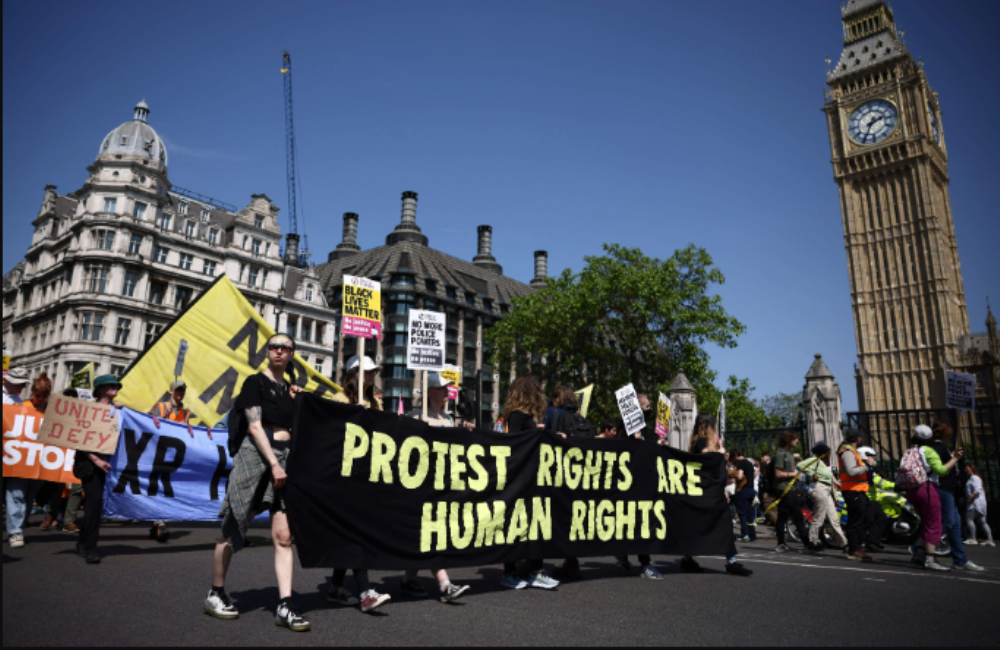
In some countries, lockdowns have also become a pretext for suppressing dissent. Peaceful protests have been banned outright, regardless of health protocols. Media outlets have faced censorship for reporting critically on the government’s response. Whistleblowers and health workers have been silenced or threatened. While public health may require limits on large gatherings, it does not justify the erosion of civil liberties or freedom of expression.
Importantly, not all people experience lockdown equally. For those living in refugee camps, prisons or crowded urban settlements, social distancing is impossible. For women and children facing domestic violence, home is not a safe space. For people with disabilities or chronic illnesses, the breakdown of health and support systems can be life-threatening. A human rights lens reveals not just the cost of lockdowns, but their unequal burden.
International human rights law does recognize that in times of public emergency, certain rights may be temporarily restricted. However, these limitations must be lawful, necessary, proportionate and strictly limited in duration. States must be transparent about the reasons for restrictions and subject to public and legal scrutiny. Human rights frameworks were built precisely for moments like this—not to obstruct action, but to guide it responsibly.
The lockdown debate is not a simple binary between saving lives and preserving rights. Human rights are not obstacles to public health; they are part of its foundation. Upholding dignity, transparency, inclusion and accountability makes responses stronger, not weaker. As countries plan exit strategies, it is crucial that rights are not treated as afterthoughts, but as guiding principles.
As of May 2020, the pandemic remains a global emergency. But emergency measures must not become normalized governance. The choices made now will shape the post-pandemic world. If we fail to protect rights in a crisis, we risk losing them long after the crisis has passed.
Human rights are not suspended during a pandemic. If anything, they are the compass we need most.
 The Human Rights Observer