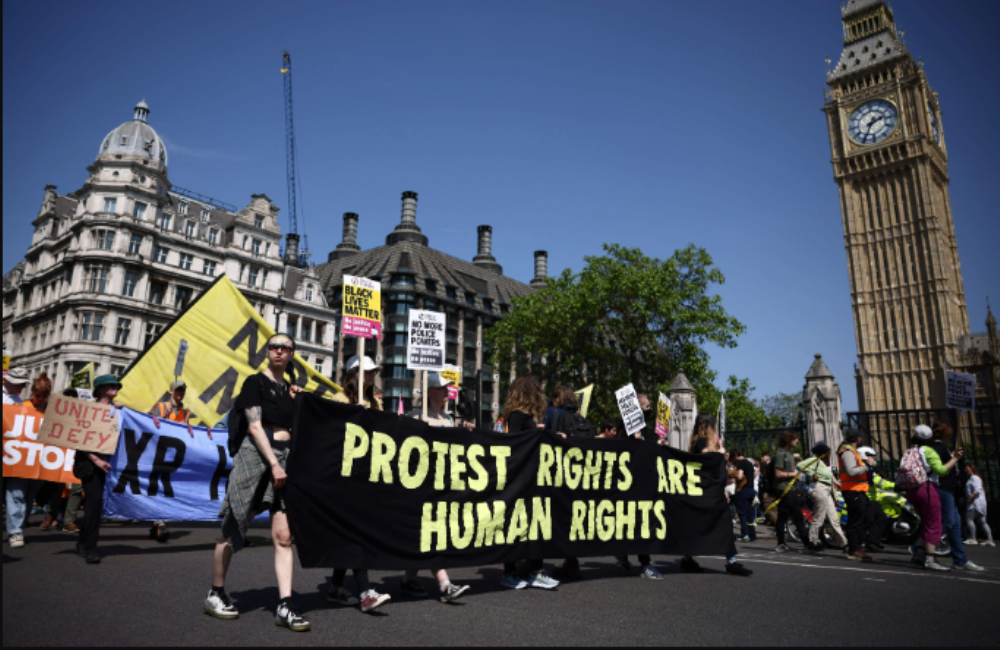
As of mid-September 2020, the COVID-19 pandemic continues to define the global landscape. While early lockdowns have eased in many places, the virus persists—with second waves, new restrictions and deepening socioeconomic disruption. But beyond the case numbers and curves lies another crisis, less visible yet equally urgent: the erosion of human rights in the name of pandemic response.
From freedom of movement to the right to health, education and work, nearly every human right has come under pressure. And while states have an obligation to protect public health, they also have a duty to protect the dignity, freedom and equality of their people. The pandemic, in many ways, has become a global stress test, revealing the strength or fragility of governments’ commitment to human rights under pressure.
One of the most glaring issues has been inequality in access to healthcare. In wealthier nations, advanced hospitals and public insurance systems have provided at least a baseline of care. But in many lower-income countries, healthcare systems have struggled with limited resources, inadequate infrastructure and insufficient personnel. COVID-19 has highlighted the right to health not as an abstract ideal but as a dividing line between survival and suffering.
Even within nations, disparities are stark. In the United States and Brazil, for instance, infection and mortality rates among Black, Indigenous and other marginalized communities are disproportionately high. In many countries, migrant workers and refugees, already living in crowded or informal conditions, face a double burden of exposure and exclusion. The virus may be biologically blind, but its impact is socially determined.
Freedom of expression and access to information have also been deeply affected. Governments around the world have passed emergency laws to criminalize “misinformation” about COVID-19. While some of these measures are understandable, others have clearly been used to suppress criticism and silence dissent. Journalists, doctors and whistleblowers have been harassed or detained for speaking out about shortages, mismanagement or corruption. The pandemic cannot be used as an excuse to shut down transparency, it should, in fact, demand more of it.
The right to privacy is facing a new frontier. Digital contact tracing, biometric surveillance and mandatory health data reporting have been rolled out at scale in many countries. While some of these tools have proven useful in limiting spread, few have been accompanied by adequate privacy protections. Without strong safeguards, emergency surveillance infrastructure can outlive the emergency itself. What is introduced to fight a virus today could be repurposed for repression tomorrow.
Meanwhile, the right to education has been profoundly disrupted. School closures have impacted over 1.5 billion students at various points this year. While online learning has filled some of the gap, it remains a distant option for children without internet access, devices or safe spaces to study. Education is not merely paused; it is at risk of deep reversal.
The economic fallout has further exposed the precariousness of workers’ rights. Informal workers, day laborers and gig economy participants, many of whom were already excluded from social safety nets, have been left without income or assistance. Even in formal sectors, workers face unsafe conditions, job cuts and exploitative practices under the guise of crisis management. Migrant workers, in particular, have endured border closures, wage theft and abandonment, all while powering essential services in agriculture, construction and care work.
Then there is the right to protection from violence and abuse. Lockdowns have led to a documented surge in domestic violence cases worldwide. Trapped at home with abusers and cut off from support services, many women and children have been left with nowhere to turn. Shelters have struggled to operate under restrictions. Governments that failed to prepare or adapt gender-sensitive responses have effectively left survivors to navigate the crisis alone.
What this pandemic reveals, perhaps more than anything, is the interdependence of rights. Health cannot be separated from housing, education or income. Freedom of expression is essential to public health. Surveillance affects equality. Crisis response is not only about medical measures, it is about justice, trust and accountability.
Crucially, states are not absolved of their human rights obligations during emergencies. International human rights law allows for temporary limitations of certain rights, but only when such measures are legal, necessary, proportionate and time-bound. Measures must not be discriminatory. They must be subject to review. They must be transparent. And they must not become permanent fixtures in a post-pandemic world.
The road ahead is uncertain. Vaccines are in development, but a return to “normal” remains distant. The challenge for human rights defenders, journalists and civil society organizations is to remain vigilant so as to track abuses, demand transparency and amplify the voices of those pushed further to the margins. Human rights must not be treated as collateral damage in the fight against COVID-19. They are, and always have been, part of the solution.
The virus has exposed many broken systems, but also opened a window for rebuilding them with more justice, equity and resilience. A rights-based recovery is not only possible, it is necessary.
 The Human Rights Observer